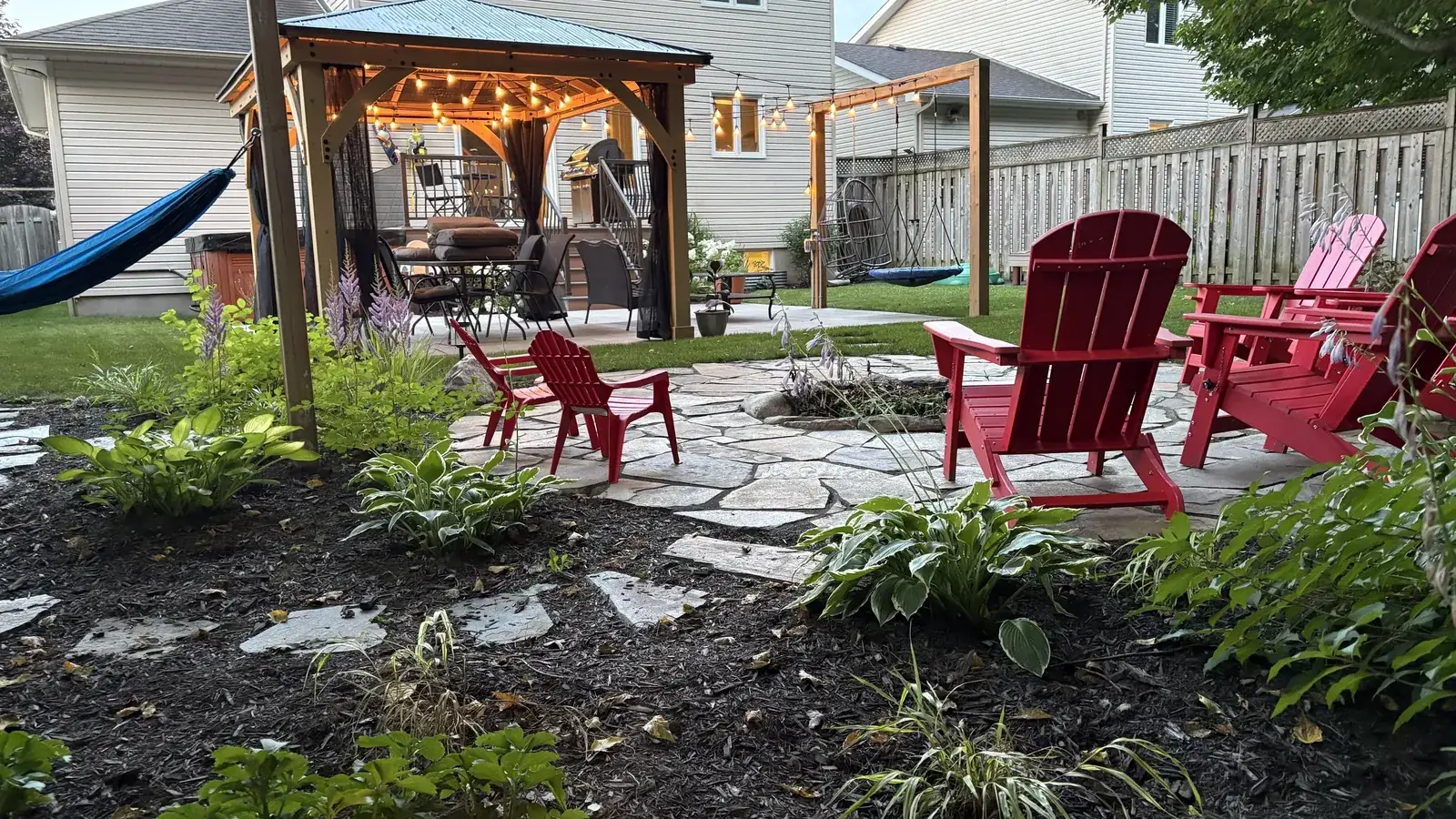
A four-season garden is planted so that each part of the year has something worth looking at, including the long stretch between the last leaves in November and the first bulbs in April. In Ottawa, that is a long part of the gardening year. Here is how a planting plan gets there, and the kinds of plants it can lean on.
What makes a garden four-season?
Flowers are only one part of it. A garden that holds through the year is built from four things that work together:
- Structure. Evergreens, shrubs with a strong shape, walls and paths that still read when everything else is dormant.
- Succession. Plants chosen so one bloom follows another, instead of everything flowering in the same three weeks of June.
- Foliage. Leaf colour and texture that carry a bed between flowers, and turn colour in the fall.
- Winter interest. Coloured bark, berries, seedheads and grasses left standing, so the snow has something to sit on.
Start with the winter view
Most people picture their garden in July. In Ottawa, you will look at it through a window far more often than you walk through it. So a good plan starts with where you actually look from: the kitchen sink, the family room, the front walk on the way to the car.
Put the strongest winter shapes in those views first. An evergreen, a small tree with good branching or a group of red-twig dogwood placed in line with a window does more for the garden from December to March than any summer perennial.
Ottawa's hardiness zone
Most of Ottawa sits in Canadian plant hardiness zone 5a or 5b, and colder pockets and exposed rural lots can behave like a colder zone. A plant rated for the zone is a starting point, not a guarantee. Wind, drainage, snow cover and the exact spot in the yard matter as much as the number on the tag.
The layers of a four-season bed
Think of a bed in layers, from the parts that never leave to the parts that come and go:
- The bones. Evergreens such as juniper, yew or upright cedar, placed for shape and year-round mass.
- Shrubs. Deciduous shrubs that earn their space twice, like ninebark for its leaf colour and peeling bark, or serviceberry for spring flowers, summer berries and fall colour.
- Perennials and grasses. The long-season fillers, chosen to flower in turn and to stand up through winter.
- Bulbs. Tucked between perennials so the bed wakes up before anything else does.
What each season can look like
Spring. Early bulbs such as snowdrops and scilla, then tulips and alliums. Serviceberry flowers early, and perennials like lungwort and bleeding heart fill shady spots before the trees leaf out.
Summer. Coneflower, black-eyed Susan, catmint and daylilies carry the sunny beds. Hostas, ferns and astilbe hold the shade. Hydrangeas start to flower toward midsummer.
Fall. Panicle hydrangea flowers age from white to pink. Little bluestem turns copper, sedum flowers go rusty red and asters bloom late. Maples and serviceberry colour up overhead.
Winter. Red-twig dogwood stems, the upright stalks of Karl Foerster feather reed grass, coneflower seedheads and the dried flowers of hydrangea hold their shape above the snow. The evergreens do the rest.
Plan for snow, salt and freeze-thaw
Ottawa winters ask a few practical things of a planting plan:
- Snow storage. Keep beds out of the places where snow gets piled from the driveway and walks, or plant them with tough shrubs that can take the weight.
- Snow load. Multi-stem evergreens can splay under heavy wet snow. Placement and plant choice help, and so does leaving room to brush them off.
- Road salt. Beds along the street and driveway take salt spray and meltwater. The plan should use more salt-tolerant plants there and keep the delicate ones further back.
- Freeze-thaw. Perennials planted late in the fall can heave out of the ground as it freezes and thaws. Timing the planting matters.
It also helps to leave perennials and grasses standing over winter instead of cutting everything back in the fall. The stems catch snow, give the garden shape and shelter insects until spring cleanup.
How a planting plan puts it together
A four-season garden rarely happens by buying what is in flower at the garden centre. It comes from a plan that maps the light in each bed, sets plants at their mature spacing and checks that every bed has something going on in each season.
At Borealis, planting is designed with the rest of the property, not added at the end. Blaise Mombourquette, who leads the studio, is a horticulturist by training, and the plant list is chosen for hardiness in Ottawa, the conditions in each bed and how the garden should look through the year.
To see how a planting plan is drawn and what it includes, visit our garden and planting design page.